"2026 Global Co-Lab Workshop" Held


2026年8月21日
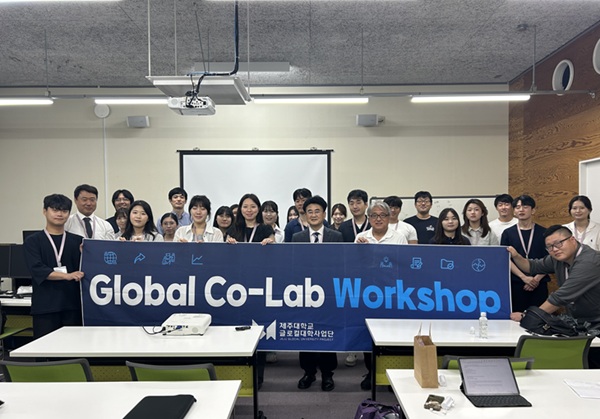
In collaboration with Jeju National University, we held the "2026 Global Co-Lab Workshop" from August 17th to 21st as an initiative to promote international exchange and global talent development in the field of bioscience.
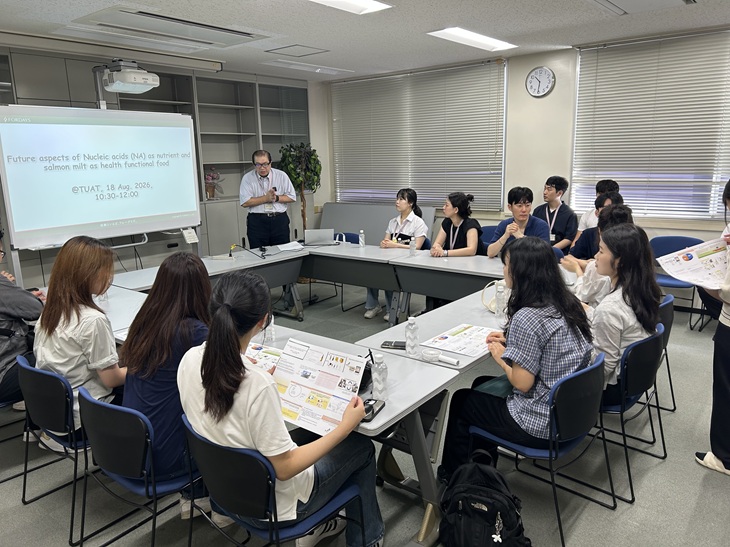
This workshop went beyond simple visits and tours to overseas universities; it was conducted as an international collaborative project workshop where students and researchers from Japan and Korea collaborated to identify global challenges in the bioscience field and seek solutions. It was jointly organized by Jeongtae Kim Associate Professor of Jeju National University and Kazuhiro Yamamoto Associate Professor of our university, with 14 students from Jeju National University and 12 students from our university participating. After a preliminary orientation and online group work, the participating students engaged in lectures at the university, laboratory visits, joint projects, and exchanges with researchers.
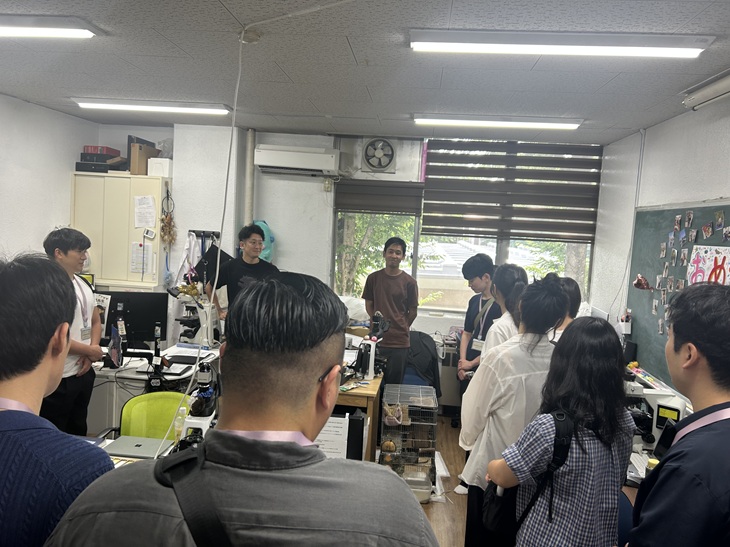
The program aimed not only to deepen knowledge in specialized fields but also to develop the ability to approach challenges from diverse perspectives such as science and technology, society, and markets, and to think interdisciplinary solutions. Additionally, through project activities with international teams, they aimed to enhance international collaboration and project management skills. Participating students attended seminars at the Koganei and Fuchu campuses in advanced research fields including next-generation nucleic acid joint research programs, biochemistry, veterinary clinical genetics and informatics, veterinary toxicology, applied protein chemistry, genetic resources and breeding, veterinary microbiology, and animal cell biology. They also learned how specialized knowledge learned at universities is applied in real-world research settings through visits to the university's Animal Medical Center and related research facilities, scientific talks by researchers, and research exchanges.
In the workshop, students and researchers from diverse academic backgrounds and cultural backgrounds discussed challenges in English and worked as teams to develop solutions utilizing their knowledge of bioscience. Through this process, participating students practically cultivated not only specialized knowledge but also interdisciplinary problem-solving skills, communication skills, international collaboration skills, and project management skills.
Taking this workshop as an opportunity, our university and Jeju National University will continue to promote collaboration through student exchanges, international joint projects, and research exchanges. A Global Co-Lab Workshop is also planned to be held at Jeju National University in 2027, and it is expected that this continued exchange will lead to further development of international joint projects and collaborative research.