"GREEN NOKO - TUAT Glocal Agri-Food Project -" Held


2026年8月21日
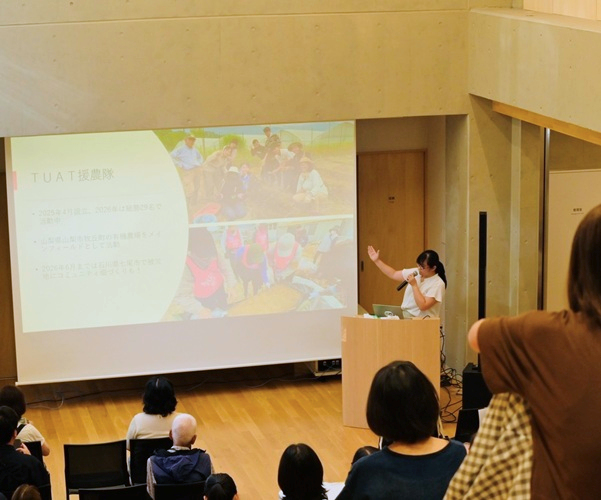
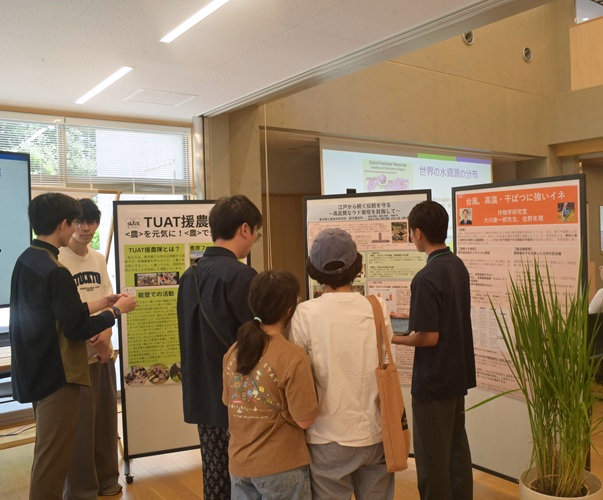
8月8日(土)、東京農工大学府中キャンパスにて、「GREEN NOKO - TUAT Glocal Agri-Food Project -」を開催しました。
GREEN NOKOは、「食と農」を切り口に、大学と地域、そして世界をつなぎながら、食や農について学び、地域を知り、世界を知ることを目的とした、学生主体のプロジェクトです。代表の佐野朱理さん(農学府生物生産科学プログラム修士1年)、副代表の不破美幸さん(農学部地域生態システム学科3年)を中心に、TUAT援農隊、Buddy Club、のこすまいとなどの学生団体が企画・運営を担いました。
On the day of the event, more than 150 people participated, including students and faculty members of our university, local residents, high school and university students, and people interested in food and agriculture.
The venue featured exhibitions, presentations, and exchange programs themed around "food and agriculture," including introductions to university research and student activities, presentations on local and high school initiatives, and introductions to food cultures from around the world by international students. With the keywords "Seeing the world from the local dinner table, and reconsidering the local area from the world's dinner table," various encounters and dialogues centered on food and agriculture transcended generations, positions, and nationalities.
Furthermore, this event provided an opportunity to consider and experience the future envisioned by GREEN×EXPO from the familiar perspective of local food and agriculture. It became a glocal learning and exchange space where we could reflect on the environment, culture, community development, and sustainable future that lie beyond food and agriculture.
We will ensure that the new connections forged through GREEN NOKO—between the university, the local community, and the world—are not merely fleeting, but are instead used to fuel future activities.