Tokyo University of Agriculture and Technology Public Symposium Commemorating the Certification of the Fuchu Campus and Honmachi Paddy Fields as a 'Nature Coexistence Site'


2026年7月28日
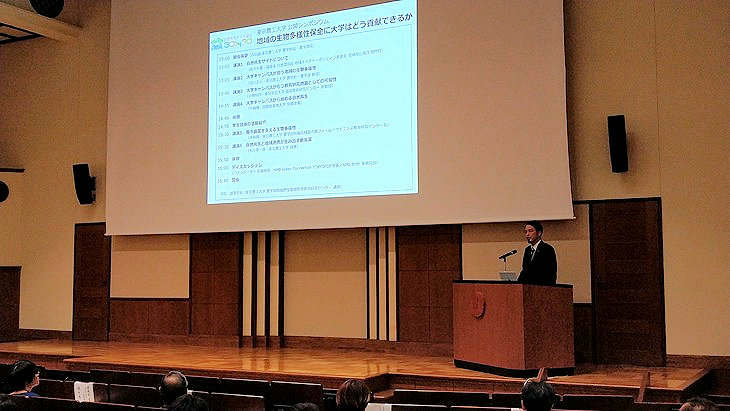
On Saturday, July 25th, a public symposium was held at the Fuchu Campus Main Building for Faculty of Agriculture Auditorium to commemorate the recognition of our university's Fuchu Campus and Honmachi Paddy Fields as 'Nature Coexistence Sites.'
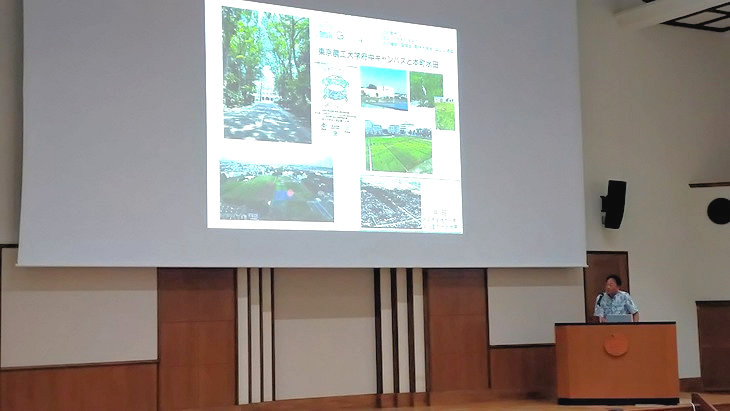
At this symposium, three external experts well-versed in biodiversity promotion activities and three Faculty Member from our university gave lectures under the theme "How Universities Can Contribute to Local Biodiversity Conservation." Each lecture introduced the importance of the role university campuses play in regional biodiversity conservation and practical case studies, providing opportunities to deepen understanding of the role universities should play from multiple perspectives.
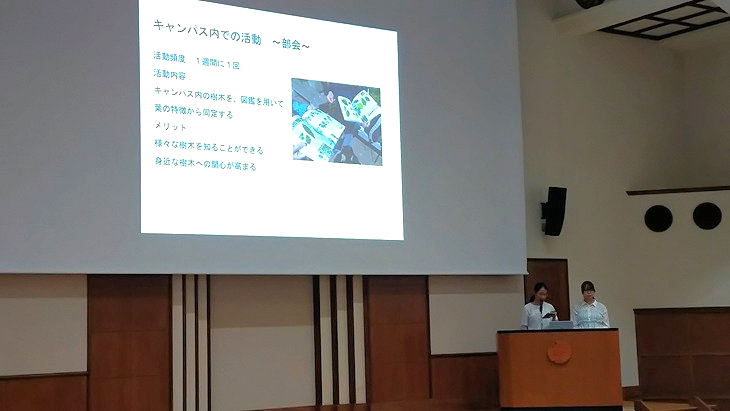
In addition, student groups that are independently engaged in biodiversity conservation activities on the university campus were introduced, sharing the broader scope of practical activities led by students, not just in education and research.
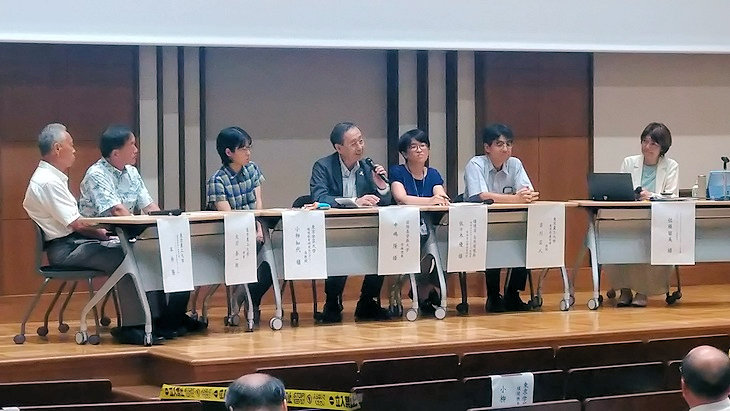
In the subsequent panel discussion, six speakers, along with external experts as commentators, engaged in a lively discussion about the role of universities in promoting biodiversity, taking into account the educational and research resources of the university and the unique characteristics of the Fuchu region. Specific functions that universities can fulfill as core hubs in the region and future prospects were shared, making it a fruitful exchange of ideas.
Following the symposium, an exchange of ideas session was held at the West Tokyo International Innovation Co-creation Center (Kaikokan), attended by many participants including speakers and faculty members. The session fostered free and lively interaction among participants, creating an opportunity for new connections to promote future collaboration.
Through this symposium, we reaffirmed our shared vision for promoting sustainable biodiversity conservation and enhancement activities in collaboration with the local community, making the most of our university's educational and research resources and geographical characteristics. Moving forward, our university will continue to play a central role in promoting biodiversity in the region and contribute to the realization of a sustainable society.
*Updated September 7, 2026: The report has been posted. Report (Minutes) (PDF: 3MB)